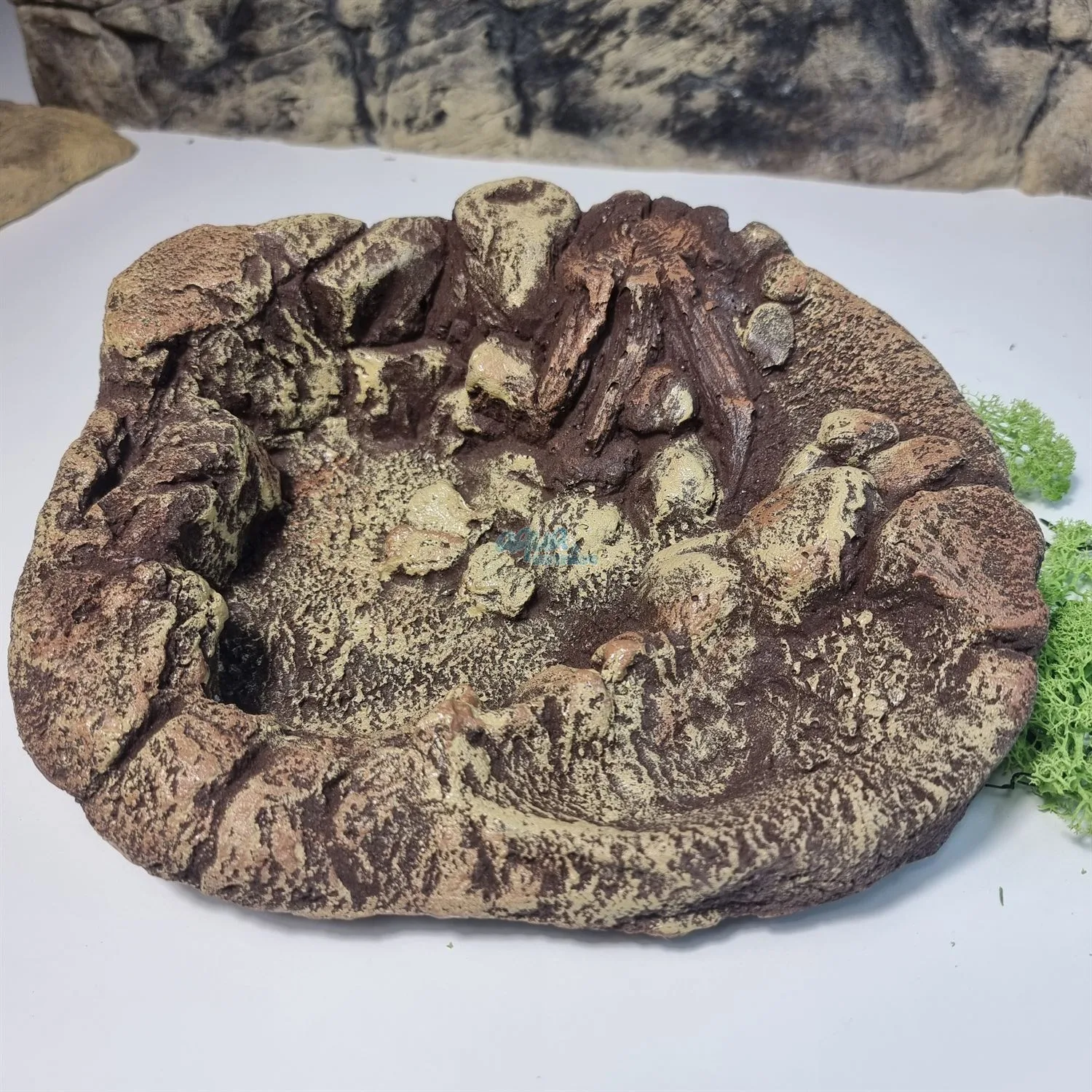
A tortoise pool and a tortoise water bowl can look similar in search results, but they are not necessarily intended for the same job. A bowl is normally chosen for everyday access to fresh water. A pool has a larger footprint and may be considered for bathing or soaking where species-appropriate guidance supports it.
Tortoise water bowl: the everyday option
A water bowl should provide practical access to fresh water while remaining stable and easy to clean. The key checks are the edge profile, external dimensions, internal basin and position within the enclosure.
For a step-by-step checklist, read our guide to choosing a tortoise water bowl or browse Aqua Maniac’s reptile water bowls and feeding dishes.
Tortoise pool: a larger water area
A pool generally occupies more floor space and may hold more water than a standard drinking dish. This makes entry, exit, stability, cleaning and humidity especially important. The word “pool” is not a guarantee of suitability for every tortoise.
Aqua Maniac’s reptile bathing pool range currently includes four external sizes:
- Mini: 17 × 15 × 6.5 cm
- Small: 22.5 × 18 × 6 cm
- Medium: 29 × 23.5 × 8 cm
- Large: 33 × 29.5 × 10 cm
Use these figures to compare the enclosure footprint. They do not replace checking the internal shape, water level and suitability for the individual animal.
When to choose a water bowl
A water bowl is usually the more practical starting point when you need:
- everyday access to fresh water;
- a compact footprint;
- quick removal and cleaning;
- less water surface area inside the enclosure;
- a choice of standard or corner shapes.
When a bathing pool may be considered
A larger pool may be considered when it has a defined role in a species-appropriate husbandry plan and the enclosure provides sufficient space. Before adding one, confirm:
- safe entry and exit;
- appropriate water depth;
- a stable, level base;
- enough remaining floor space;
- manageable cleaning and water changes;
- acceptable effects on enclosure humidity.
Ask a reptile-experienced professional if you are uncertain. Do not interpret unusual behaviour or persistent soaking as proof that the animal simply needs a bigger pool.
Standard, corner or pool format?
A standard bowl is flexible and approachable from several directions. A corner bowl saves central floor space by fitting against two walls. A pool uses more area but provides a larger defined water zone. The correct format depends on the purpose and layout, not on appearance alone.
Cleaning workload
Any water container can collect substrate, food and waste. Larger pools usually require more water and can be harder to lift without spilling. Choose a design that you can realistically clean as often as required.
- Remove dirty water promptly.
- Wash with a reptile-safe product.
- Rinse thoroughly.
- Inspect for damage.
- Return the container to a stable position.
Quick comparison
| Feature | Water bowl | Bathing pool |
|---|---|---|
| Typical role | Everyday drinking access | Larger water or bathing area where appropriate |
| Floor space | Usually lower | Usually higher |
| Cleaning | Generally quicker | May take more time and water |
| Humidity effect | Depends on size and placement | Larger surface area may have more effect |
| Selection basis | Access, dimensions and stability | Purpose, safe access, depth and professional guidance |
Frequently asked questions
Is a reptile pool automatically suitable for tortoises?
No. Check the product design, measurements and species-specific care guidance before use.
Can I use a water bowl for food?
Some reptile bowls can hold either food or water. Separate dishes generally simplify cleaning and help keep drinking water free from food.
Which option is easier to fit in a small enclosure?
A compact or corner water bowl normally uses less floor space than a bathing pool, but always compare exact measurements.
Choose by purpose: compare reptile water bowls and reptile bathing pools from Aqua Maniac.