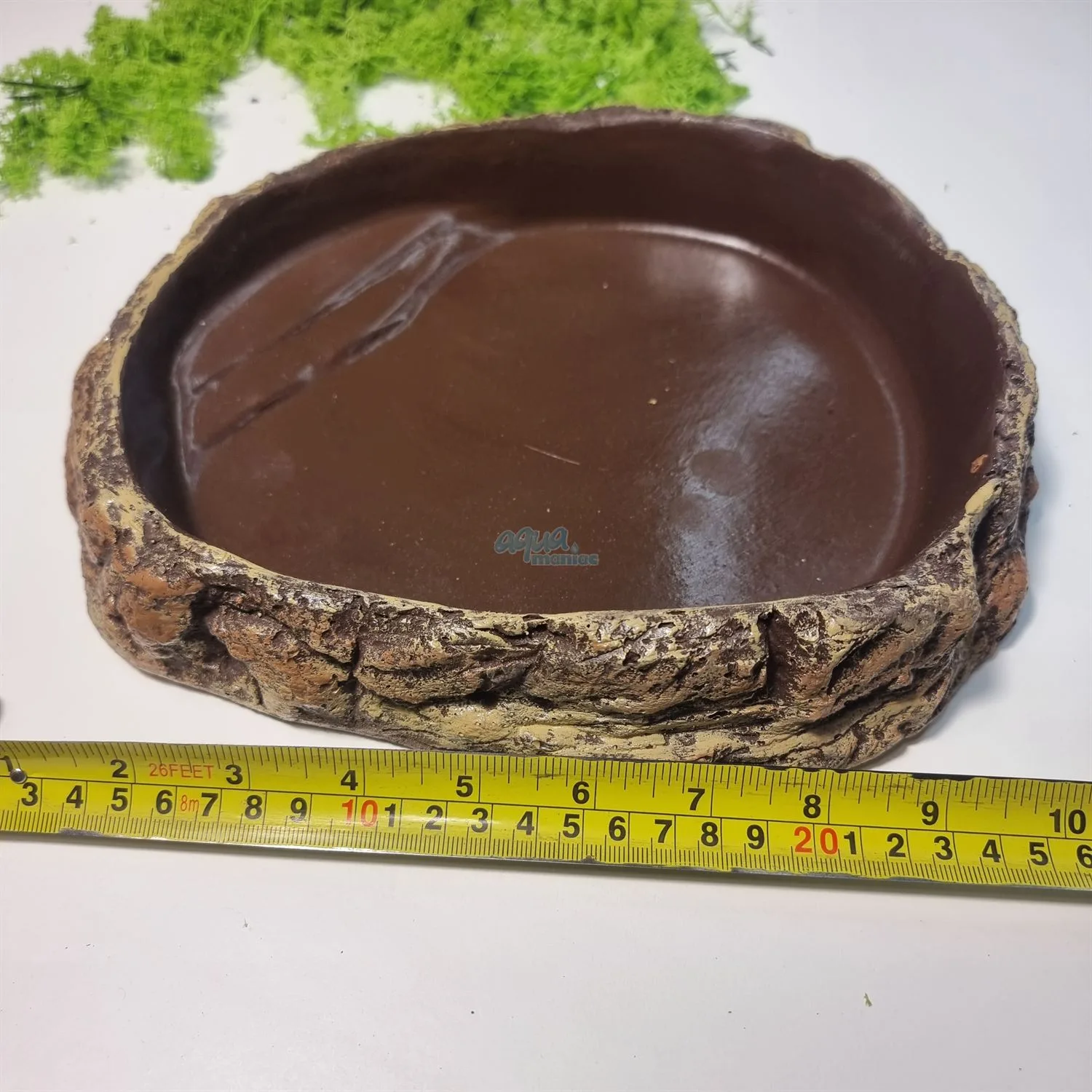
A good tortoise water bowl needs to do more than hold water. It should be easy to approach, difficult to tip, simple to clean and correctly sized for the animal and enclosure. If you are comparing options, browse Aqua Maniac’s reptile water bowls and feeding dishes, then use the checks below before choosing a size.
What makes a good tortoise water bowl?
The best choice is not necessarily the deepest or largest dish. For many tortoise setups, access and stability matter more. Look for a broad, stable footprint and an opening your tortoise can approach without struggling. The animal should not have to negotiate an awkward, steep edge to reach the water.
- Accessible shape: check the external height and lip against your tortoise’s size and mobility.
- Stable base: a substantial bowl is less likely to move during normal enclosure activity.
- Useful capacity: enough water for drinking and normal use without taking over the enclosure.
- Smooth interior: easier to rinse and wipe during routine cleaning.
- Easy placement: the bowl should fit without blocking hides, basking areas or regular routes through the enclosure.
Water bowl, water dish or bathing pool?
Shoppers use all three phrases, but they can describe different products. A tortoise water bowl or water dish is normally chosen for everyday access to fresh water. A larger bathing area takes up more floor space and needs especially careful attention to entry, exit and water depth.
Do not assume that a product called a reptile pool is automatically right for every tortoise. Compare its dimensions and profile with your animal, enclosure and established husbandry guidance. If you are uncertain, ask a reptile-experienced vet or qualified keeper before using a deep or unfamiliar design.
How large should a tortoise water dish be?
Start with measurements rather than labels such as small, medium or large. Product names are useful for browsing, but dimensions are what tell you whether a dish will fit your setup.
- Measure the clear floor area where the dish will sit.
- Check the product’s full external length and width.
- Check the external height and the shape of the entry edge.
- Make sure the placement leaves a clear route around the enclosure.
- Observe the tortoise after installation and change the setup if access looks awkward.
A larger tortoise does not simply need a taller bowl. It needs a stable, accessible water area that works with its body size and enclosure layout.
Where should the bowl sit?
Placement affects both cleanliness and use. Put the dish on a level, stable part of the enclosure where it can be reached and removed for cleaning. Avoid balancing it on loose décor. Substrate can be carried into any floor-level dish, so allow room around it for routine spot cleaning.
For compact layouts, a corner reptile bowl can preserve more open floor area. A standard bowl may be easier to approach from several directions. Choose based on the actual route your tortoise uses rather than appearance alone.
Can the same dish hold food and water?
Many resin bowls can be used as either a water dish or a food dish. When space permits, separate dishes make daily care clearer: one remains dedicated to fresh water while the other can be removed after feeding. This also reduces the chance of leftover food contaminating the water.
Aqua Maniac’s range includes compact, medium, large and corner designs in rock- and bark-effect finishes. Use the listed measurements to compare models; do not rely only on a species name in a search result.
Cleaning a tortoise water bowl
- Replace dirty water promptly and provide fresh water regularly.
- Remove visible food, substrate and waste.
- Wash the bowl with warm water and a reptile-safe cleaning product.
- Rinse thoroughly before returning it to the enclosure.
- Inspect for damage and replace a bowl that has become cracked or difficult to clean.
Always follow the product care instructions. Do not use a household chemical simply because it is convenient; residues may be unsafe in an animal enclosure.
Tortoise water bowl buying checklist
- Have you measured the available floor space?
- Is the edge appropriate for the tortoise’s size and mobility?
- Can the bowl sit flat and remain stable?
- Can you lift it out easily for cleaning?
- Will you use it for water only, or keep a separate food dish?
- Have you checked the exact dimensions rather than relying on “large” or “small”?
Frequently asked questions
Do tortoises need access to fresh water?
Water provision is part of responsible husbandry, but the correct setup varies by species, age, health and enclosure. Follow species-appropriate guidance from a reliable professional source.
Can I use a plant-pot saucer?
Some keepers use alternative containers, but a purpose-made dish provides known dimensions and a design intended for enclosure use. Whatever you choose must be stable, cleanable and appropriate for the animal.
Is a resin bowl easy to clean?
A smooth internal surface is designed to make routine rinsing and wiping straightforward. Clean it regularly and replace it if damage creates areas that are difficult to sanitise.
For help comparing every format, read our complete reptile water bowl guide.
Ready to compare sizes? Shop reptile water bowls and feeding dishes from Aqua Maniac.