A reptile bathing pool can create a defined water area for drinking, bathing or soaking where that use is appropriate for the animal. Choosing one requires more than picking the biggest model that fits. External dimensions, entry profile, water depth, stability, placement and cleaning all need consideration.
Aqua Maniac’s reptile bathing pools and terrarium pools are available in four sizes, allowing you to compare the footprint before ordering.
What is a reptile bathing pool?
A bathing pool is a larger enclosure water feature than a typical drinking bowl. Depending on the species and care plan, it may provide a place for drinking, bathing or soaking. It can also become a visual feature in a naturalistic terrarium.
The product name does not decide suitability. Reptiles and amphibians have different requirements, and individual size, age, health and mobility matter. Follow reliable species-specific guidance.
Reptile pool or water bowl?
Choose a reptile water bowl when the main need is a compact source of drinking water or a food dish. Consider a pool only when a larger water area has a clear purpose and can be accommodated safely.
- Water bowl: smaller footprint, quicker water changes and standard or corner formats.
- Bathing pool: larger footprint and water area, with greater emphasis on access, water level and humidity.
How to choose a reptile bathing pool size
Measure first. Mark the full external footprint inside the enclosure and assess how much usable space remains. Aqua Maniac’s current range includes:
- Mini: 17 × 15 × 6.5 cm
- Small: 22.5 × 18 × 6 cm
- Medium: 29 × 23.5 × 8 cm
- Large: 33 × 29.5 × 10 cm
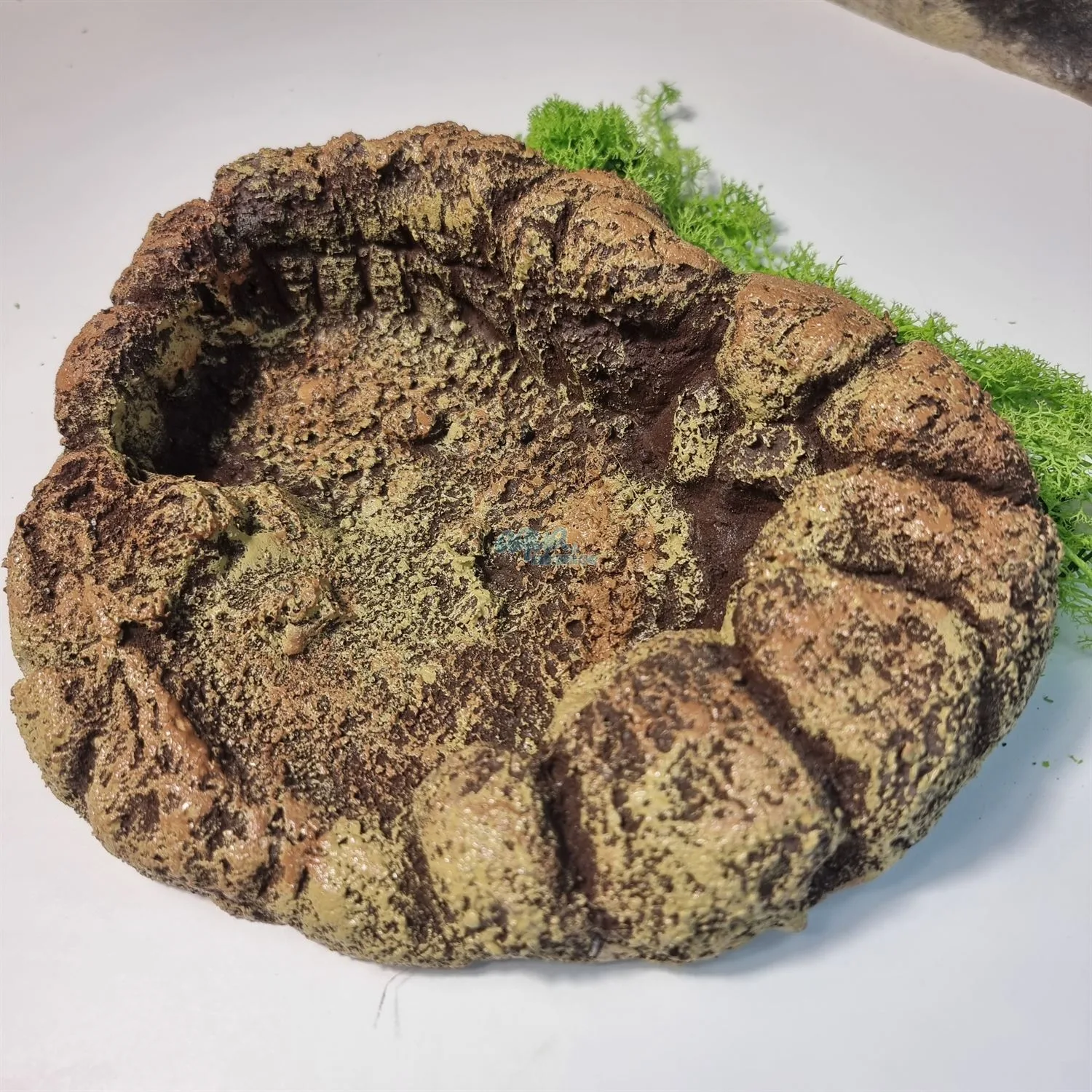
These are external measurements. Examine the product images and description to understand the internal shape. Do not infer the correct water depth from the external height alone.
Check entry and exit
The animal must be able to enter and leave without struggling. Consider body size, mobility and the pool’s approach profile. A design that works for one species or adult animal may not work for a smaller individual.
If the intended use involves bathing or soaking and you are uncertain about access or water level, ask a reptile-experienced vet or qualified keeper before installation.
Placement inside the terrarium
Set the pool on a flat, stable surface. Loose substrate underneath can create movement or tilt. Leave enough space around it for normal enclosure routes and make sure nearby décor cannot shift into the water.
Keep the pool removable. If cleaning requires dismantling half of the enclosure, routine maintenance becomes unnecessarily difficult.
Humidity and evaporation
A larger water surface can influence evaporation and local humidity. The effect depends on temperature, ventilation, placement and water area. Monitor the enclosure with suitable instruments after adding or moving a pool.
Do not use a pool as a substitute for correcting a wider humidity or husbandry problem. Review the complete setup when conditions are outside the appropriate range.
Cleaning a terrarium pool
- Remove contaminated water promptly.
- Lift the pool carefully to avoid spilling into the substrate.
- Wash with warm water and a reptile-safe cleaning product.
- Rinse thoroughly.
- Inspect for cracks, chips and worn areas.
- Refill according to the animal’s care plan and return the pool to a stable location.
Rock-effect pools in natural enclosures
A realistic stone finish helps the water feature blend with hides, branches and 3D backgrounds. Appearance should support—not override—practical decisions. The internal basin must remain easy to inspect and clean, and the size must suit the available space.
Reptile bathing pool checklist
- Purpose confirmed
- Species guidance checked
- External footprint measured
- Entry and exit assessed
- Water depth planned appropriately
- Stable placement selected
- Humidity monitoring available
- Cleaning routine realistic
Frequently asked questions
Do all reptiles need a bathing pool?
No. Requirements vary by species and individual. Many setups need a drinking dish but not a large pool.
Is the largest pool the best choice?
No. Select the smallest practical size that supports the intended use, access and care guidance while preserving enclosure space.
Can amphibians use the same pools?
Some products may be marketed for reptiles and amphibians, but suitability still depends on the particular animal and setup. Check qualified species-specific guidance.
Compare all four sizes: shop reptile bathing pools and terrarium pools.